Back to Our Work

E.B. — Open Concept Transformation


The Project

The homeowner had a clear vision — open up the entire first floor and create one connected living space that flowed from the living room straight through to the kitchen. Standing in the way was a center load-bearing wall running the full width of the house. Walls like this don't come down without a real plan. They're carrying the weight of everything above them, and if you get it wrong the consequences are serious.

Our first step was a full structural assessment. We verified the wall's load path, confirmed the foundation conditions, and worked out the correct steel I-beam specification with the architect. The beam needed to span the entire opening — no posts, no columns breaking up the space — which meant getting the sizing exactly right and ensuring the foundation at each end could handle the concentrated point loads.

Once the plan was locked in, we built a temporary support system to carry the floor above while we removed the wall and set the beam. Every temporary column, every header, every piece of that shoring system had to be right before we touched the existing structure. The homeowners were living in the space during construction — protecting their home and their belongings was part of the job.
Before


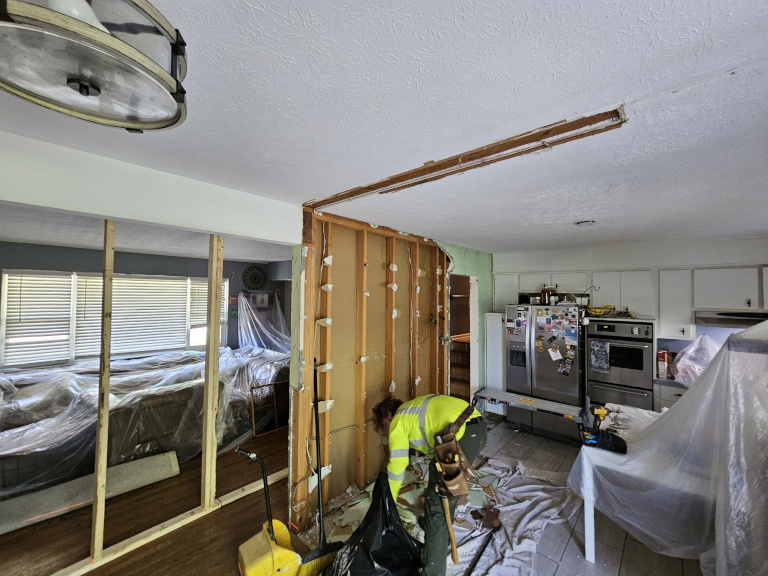
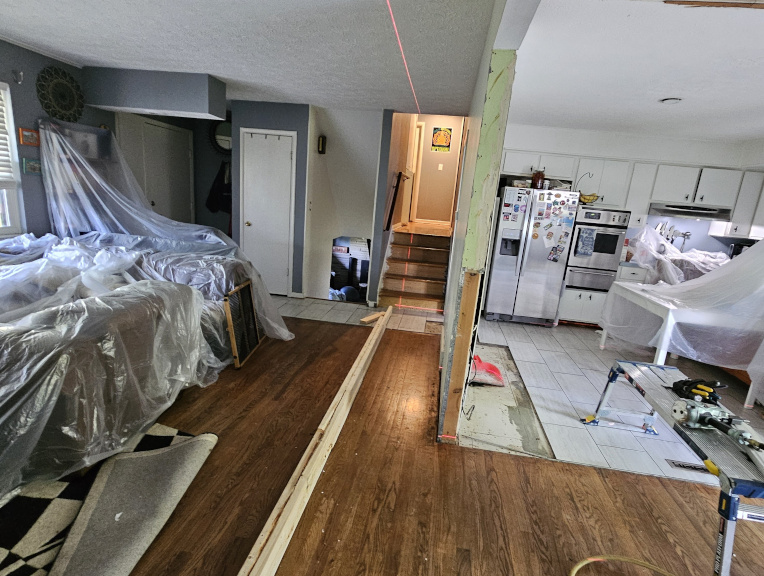
The first floor was divided into separate rooms — a defined living room on one side, kitchen on the other, with the bearing wall cutting the space in half. The home had good bones and the owners had already invested in quality finishes throughout, but the layout kept the spaces feeling smaller and more closed-off than the footprint deserved. The goal wasn't to renovate the finishes — it was to fundamentally change how the space felt to be in.

During


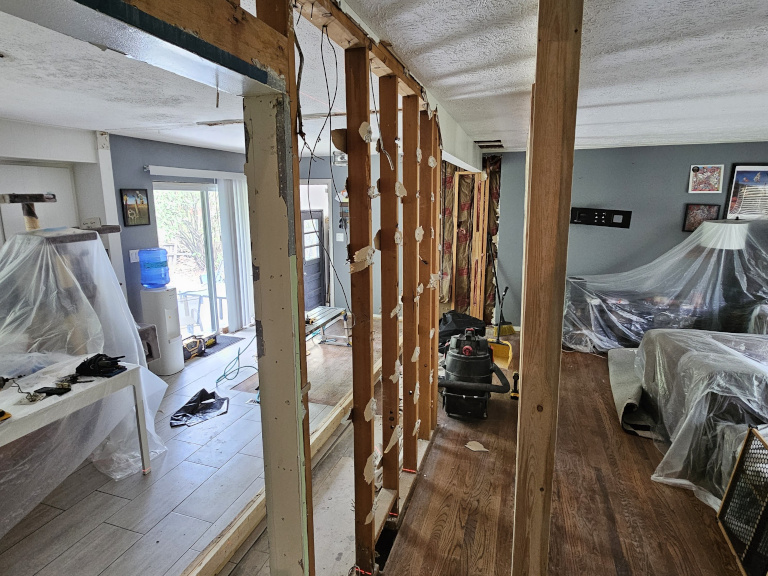
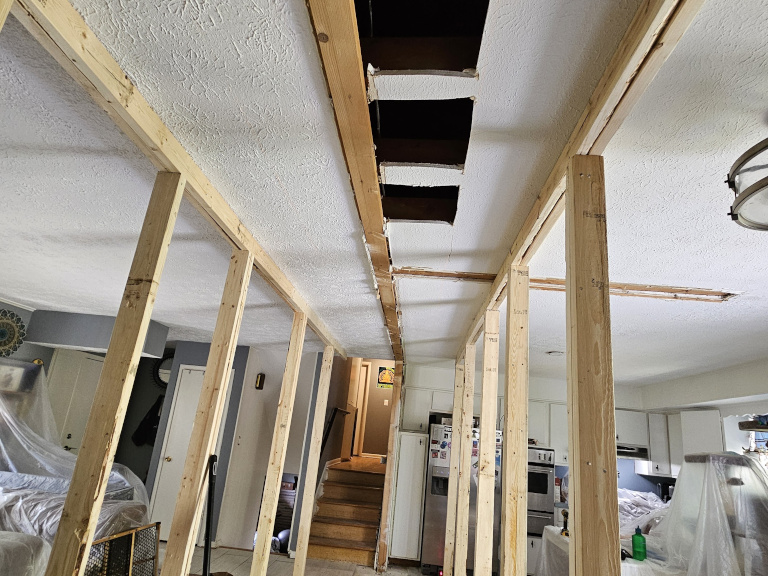
Before any of the existing framing was touched, we built out a full temporary support system — rows of vertical columns running parallel to the wall on both sides, tied to a horizontal carrying beam above that picked up the load from the floor joists above. Only once that shoring was in place and verified did we begin opening the wall.

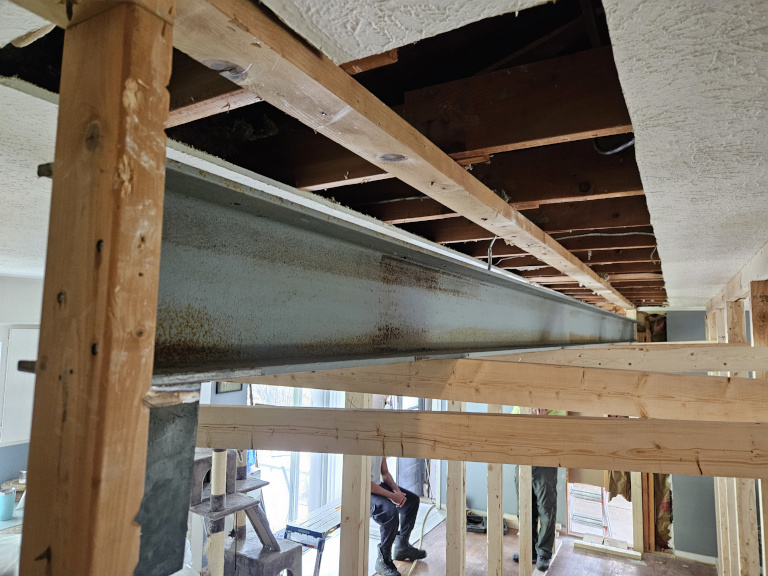
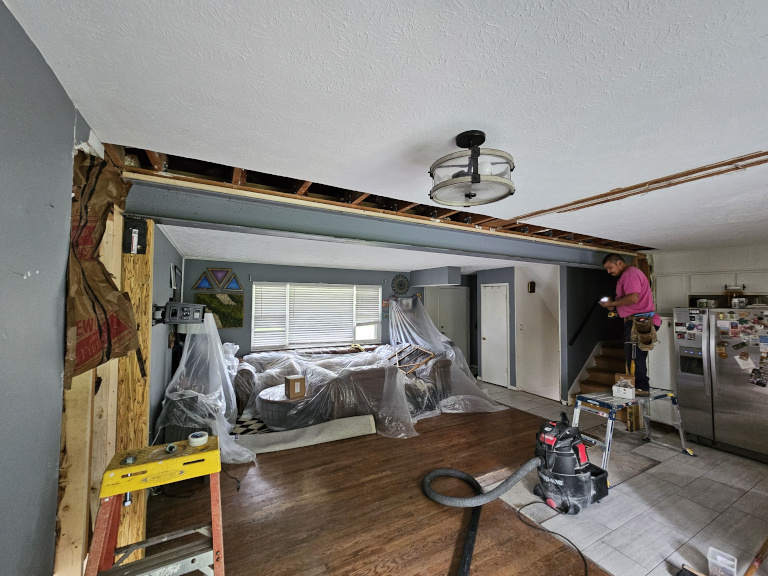
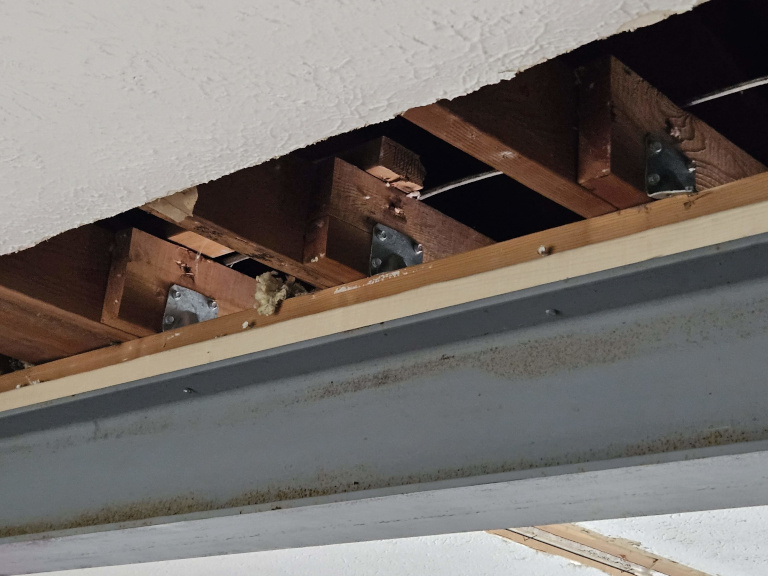
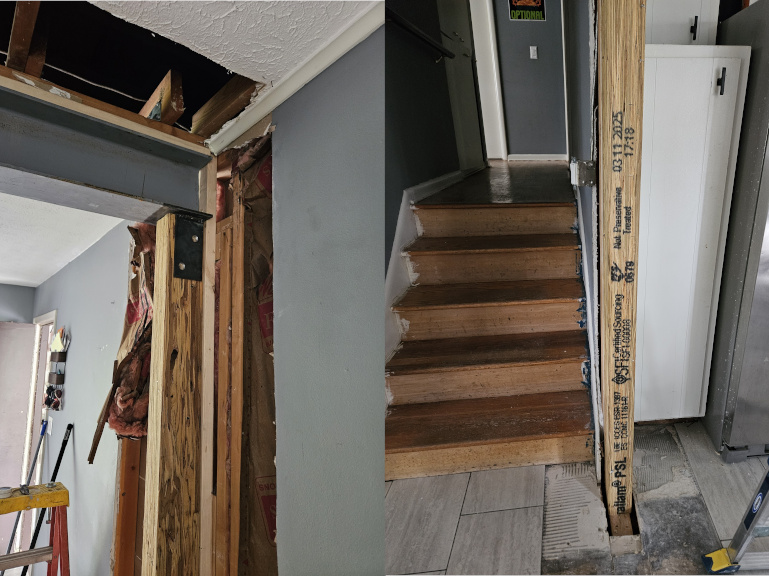
With the wall framing removed, the full scope of the work became visible — the existing ceiling joists, the electrical running through the wall cavity, and the point load locations at each end of the planned beam. We set the steel I-beam using a combination of temporary jacks and careful manual positioning, lowering it into pockets cut into the existing structure at each bearing point. Joist hangers were installed across the full length of the beam to pick up every floor joist above. Once the beam was set and the connections confirmed, the temporary shoring came down and the space opened up for the first time.

After


The result is exactly what the homeowner envisioned — one continuous open space connecting the living room, dining area, and kitchen without a single column or post interrupting the flow. The hardwood floors run unbroken from the front windows all the way through to the kitchen, and the sightlines from one end of the house to the other are completely open. Large sliding glass doors at the rear bring in natural light from outside and connect the interior to the deck.

The steel I-beam was wrapped, the ceiling patched, and all the finishes restored to match the existing interior. To someone walking in today, the work is invisible — which is exactly how it should be. What they notice is the space itself: bigger, brighter, and more connected than it ever was before. That's what good structural work looks like when it's done right.


Dream. Build. Inspire.