← Back to Our Work

Azelda Kitchen Renovation

This client found iSpec through a web search while looking for a contractor she could trust with a project that had some unusual requirements. After an on-site assessment and several extensive phone conversations, she chose us — not just for the scope of work, but because we took her concerns seriously from the start.

The property is a homeowner-occupied residence near Clintonville in Columbus. The kitchen had been remodeled at some point by the previous homeowner — a DIY renovation that created more problems than it solved. The ceiling was failing, the electrical was overloaded, the plumbing wasn't vented properly, and the finishes were falling apart. It wasn't cosmetic wear. It was a kitchen that had been put together wrong and was actively deteriorating.

What made this project different from a standard kitchen renovation was the client herself. She has severe sinus sensitivity, which meant we couldn't just demo the space and let the dust settle. Every step of the project — from material selection to daily cleanup to the equipment we brought on site — had to account for her health. That added a layer of planning that most kitchen remodels don't require.

Our first on-site visit was in April. What followed was months of phone conversations, budget planning, material sourcing, and problem-solving before we signed a contract in August. By the time we broke ground, every material had been selected and sourced, the air scrubber had been identified, and the plan was locked in. The finished kitchen is exactly what the client envisioned — shiplap walls, custom cabinetry, and finishes she picked herself, built on a structure that's actually sound.
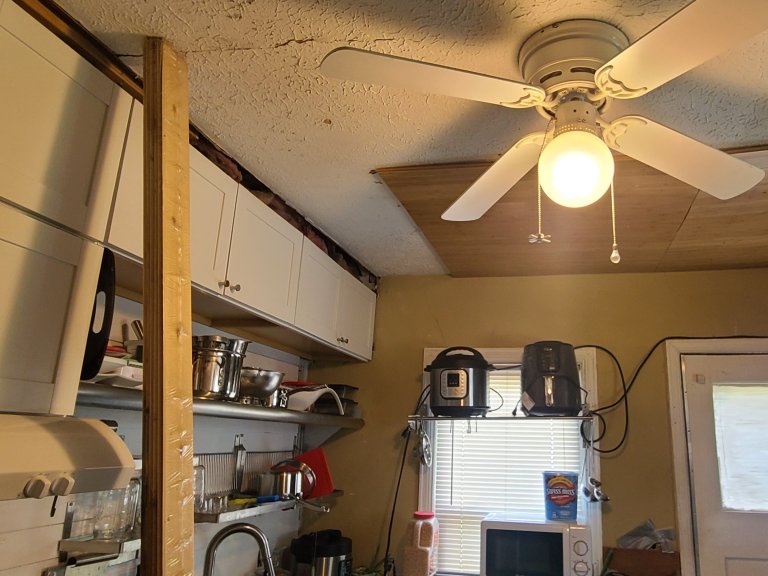
Before


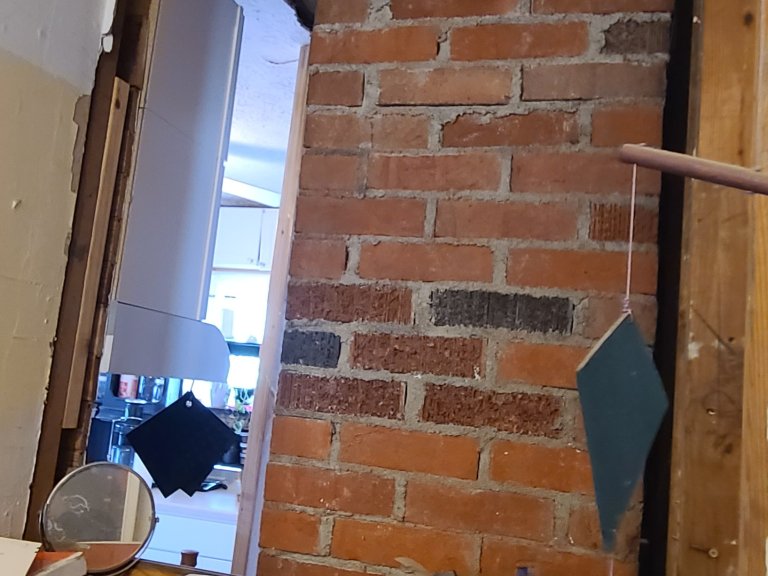
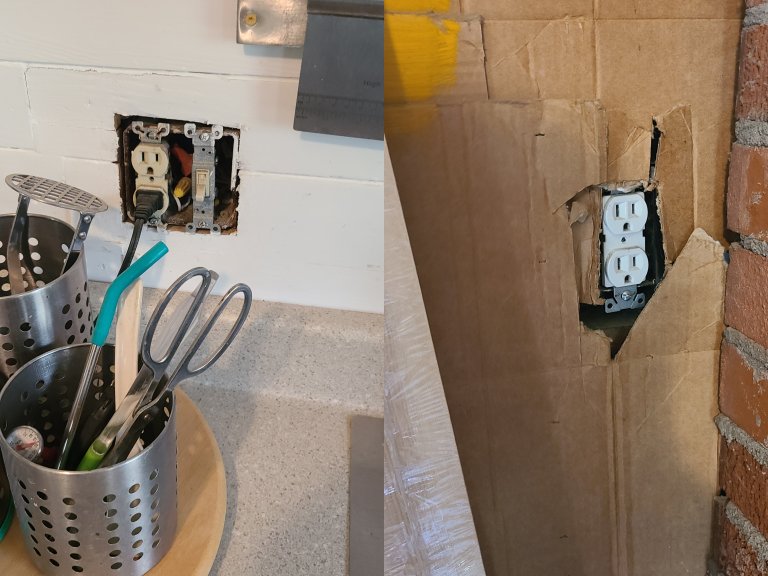
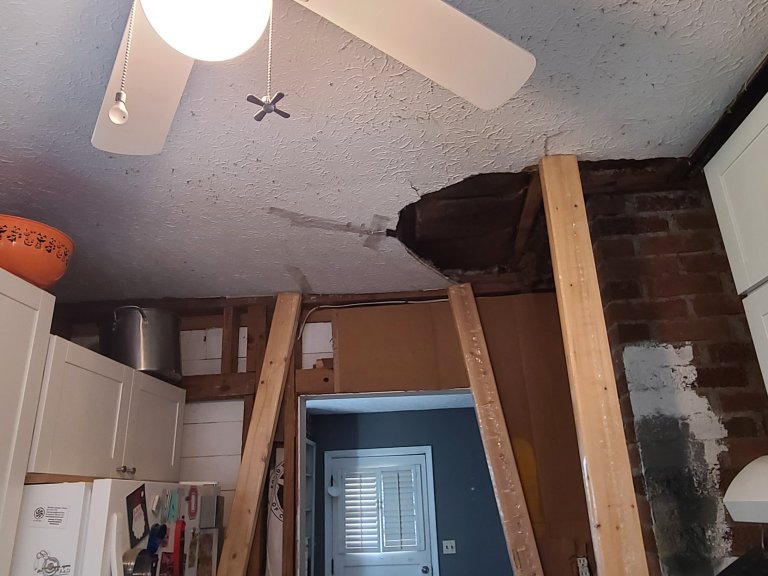
The previous homeowner had done the kitchen themselves, and it showed. The ceiling was sagging — not from structural failure, but from a roof leak that had been there long enough to rust out the old drywall nails. The nails were failing one by one, and the drywall was pulling away. The roof had been replaced about a year before we got there, so the leak was gone, but the damage was done. Someone had propped a 2x4 under the ceiling to hold it up, with a plywood patchwork around the door header as a band-aid fix.Beyond the ceiling, the electrical was DIY and overloaded — fixtures had no cover plates and were mounted in what appeared to be cardboard. The back door wouldn't close properly because it had been hung wrong. The VCT tile flooring was curling up where the adhesive had failed. The plumbing under the sink wasn't vented correctly, so the drain was slow.

During


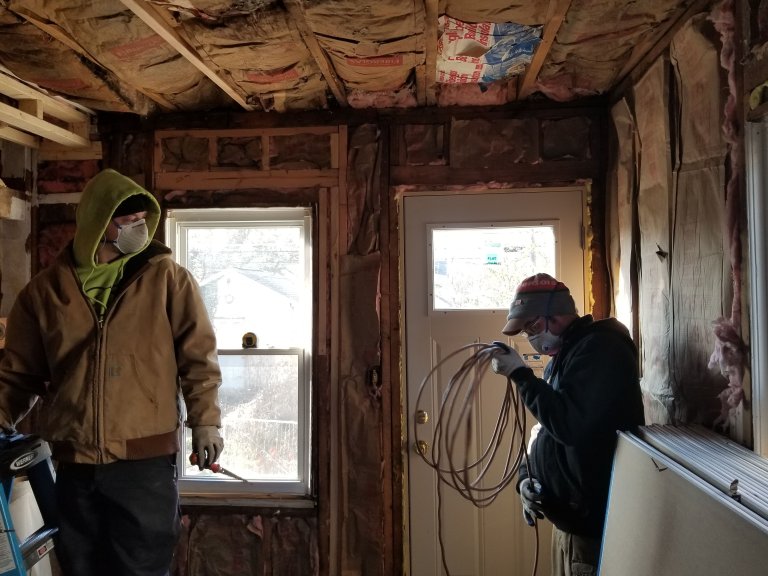
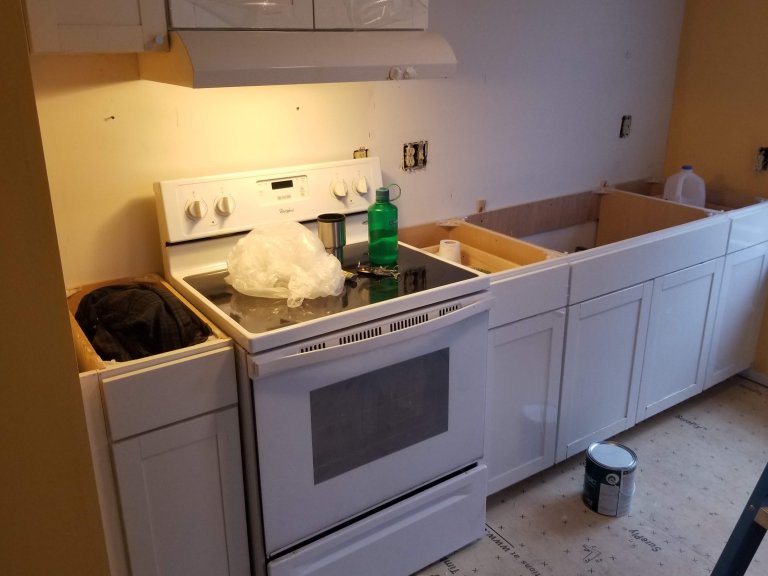
Demo went quickly. We pulled the drywall off the ceiling and walls, removed the VCT flooring, and took out the door and window casings. Because of the client's sinus sensitivity, we ran a negative air scrubber on maximum volume the entire time we were working. When we left for the day, we dropped it to minimum and let it run overnight. We also cleaned the workspace thoroughly at the end of each day — standard practice on an occupied site, but especially important here.

With the ceiling open, the fix was straightforward. The old drywall nails had rusted out from the prior roof leak, but the framing above was sound. We hung new drywall with drywall screws at proper spacing and fastened at the correct locations — no structural repair needed, just the right fasteners in the right places.

On the electrical side, we rewired the kitchen and cleaned up the fixtures. The previous DIY wiring was overloaded and not up to standard — we replaced it with properly sized circuits, installed GFCI outlets at the counter locations, and added cover plates where there had been none. For plumbing, we installed the new larger sink basin the client had selected and corrected the venting issue that had been causing the slow drain. The back door was replaced entirely — the old one had been improperly hung and wasn't sealing.

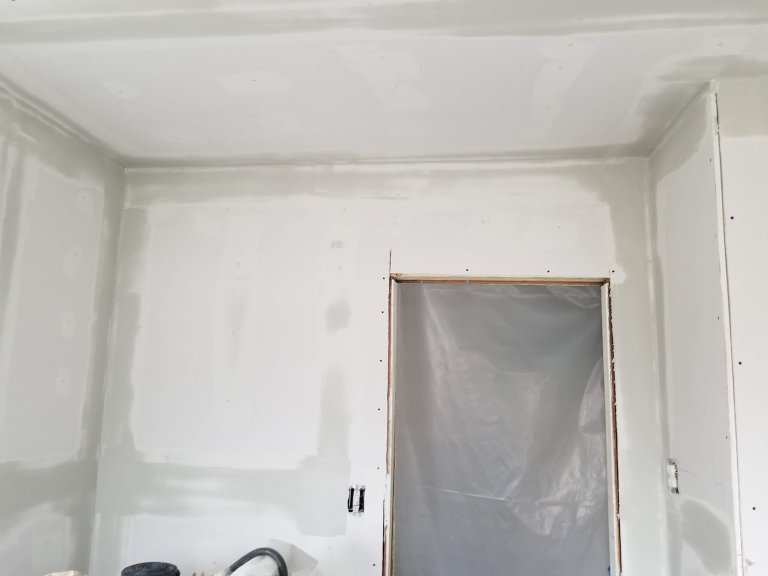
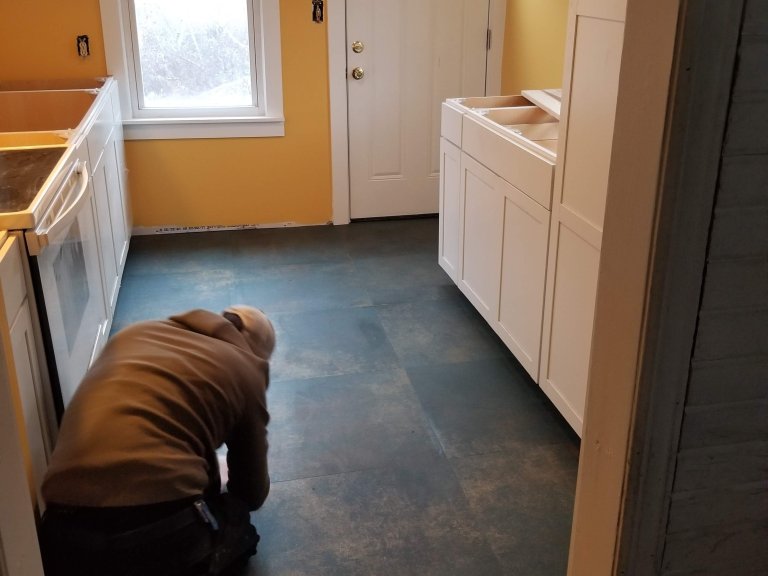
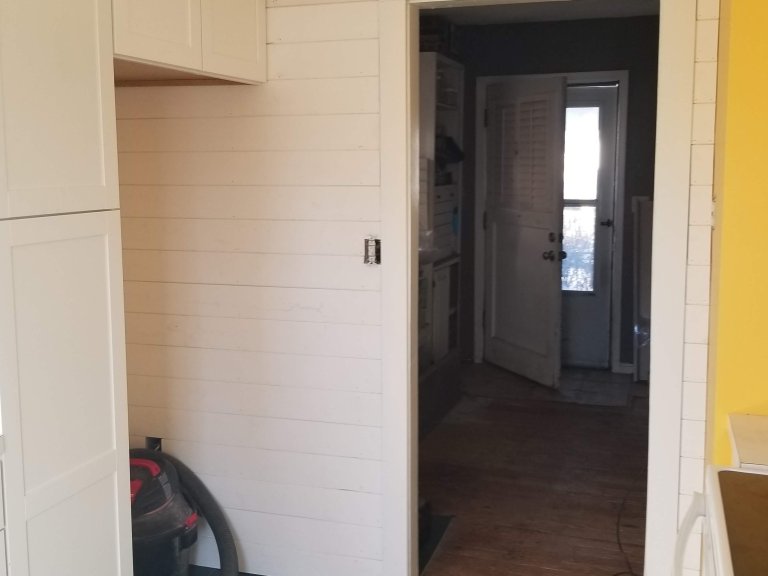
We insulated the exterior wall and caulked gaps where air and moisture had been getting in. New drywall went up on the walls, taped and finished with joint compound. From there, the finish work began. The walls received real wood shiplap, painted to the client's chosen color. We primed and painted before the cabinets went in. The white shaker cabinets were installed throughout, including a custom configuration we built to wrap around the refrigerator — making the unit look built-in rather than dropped into a gap. The client had sourced a specific LVT flooring before the project began — a special order with a thick wear layer suited for a high-traffic area. Because it was sourced ahead of time, we had no material delays. We installed the LVT and applied a seal coat to extend the life of the flooring.

The project took roughly three to four weeks of active work, with the end-of-year holidays falling in the middle of the schedule.

After


The finished kitchen reflects exactly what the client had in mind. She came into the project with a clear vision for the wall color, cabinet color, countertop, and flooring — and while some compromises were made to stay within budget, the end result is unmistakably hers.

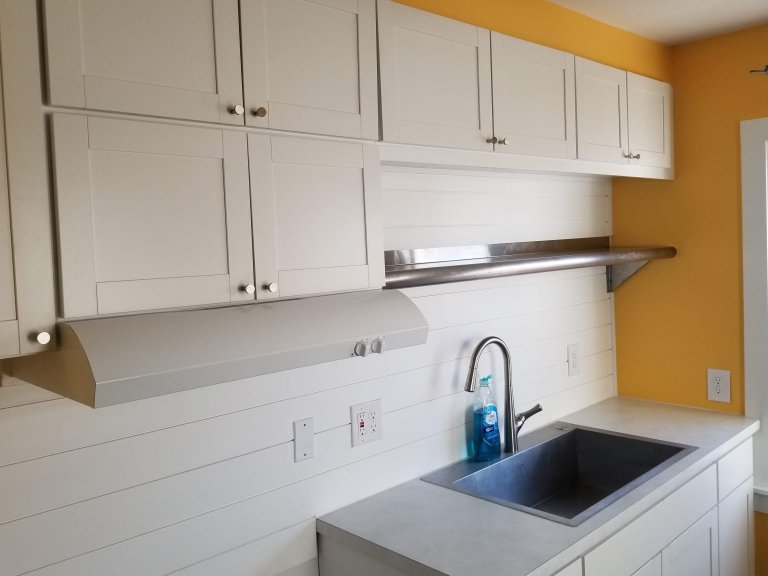
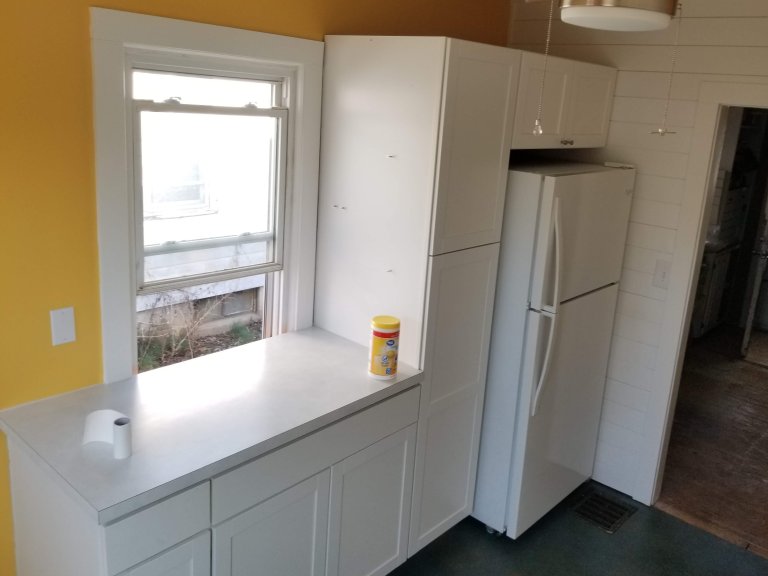
The white shaker cabinets run the length of the kitchen. We built them in with a custom wrap around the refrigerator, making the unit look built-in rather than dropped into a gap — that detail came from how we installed them, not from ordering a specialty product. The countertops are white laminate — the client wanted something low-maintenance and easy to clean, and while granite wasn't in the budget, laminate gave her the look she was after without the upkeep of butcher block, which she had also considered. The walls are finished in real wood shiplap, painted, giving the space a clean, textured look that was exactly what she had envisioned from the beginning.

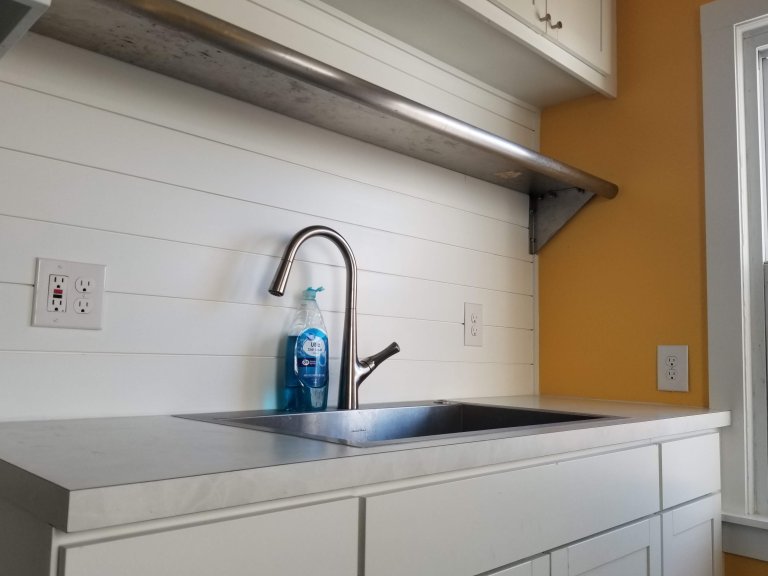
At the sink, a larger basin replaced the undersized original, and beside it, a stainless steel restaurant-style shelf the client found at an architectural salvage store. It's a detail that gives the kitchen personality — something she picked out herself that fits the space perfectly.

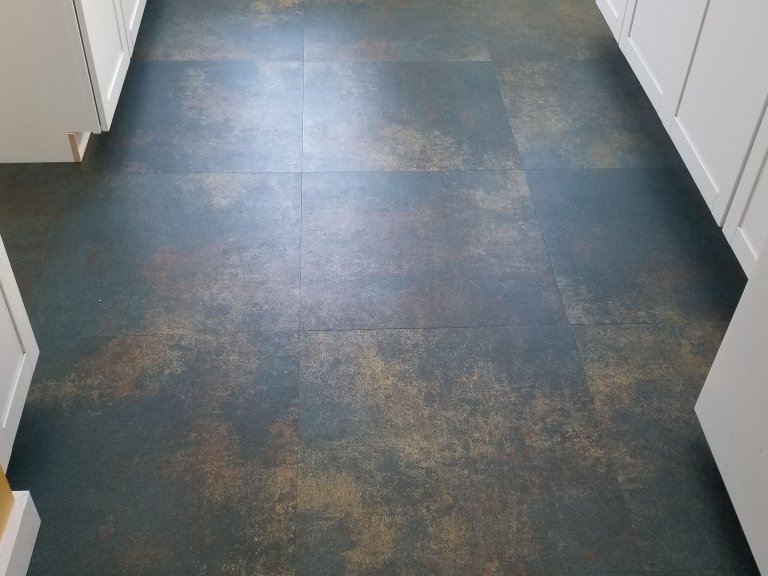
The LVT flooring runs throughout, sealed for durability in a room that sees daily traffic. What was a kitchen held together with band-aid fixes and improvised repairs is now a clean, functional space — built correctly, finished to the client's taste, and done without compromising her health in the process.