← Back to Our Work

Camp Cooke Kitchen

This client was referred to us by the family behind our Jesse and Joey kitchen project. At the time, she was looking for a contractor to renovate her main bathroom on a budget — and every contractor she talked to told her the budget wasn't realistic. We took a different approach. Anyone can build anything with an unlimited budget. What sets iSpec apart is how we prioritize your needs and wants based on the budget you actually have, then find a way to make it happen. That doesn't mean cutting corners — it means making smart, intentional choices about where the money goes so the finished product stands on its own. We worked with her, built her bathroom within her budget, and delivered a result she was proud of. When it came time for her next project, she came back to us. That kind of repeat trust is something we never take for granted.

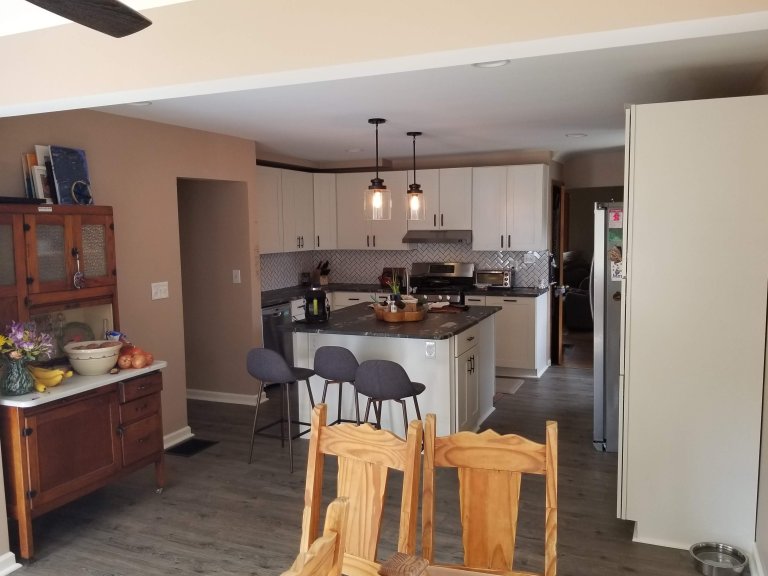
Her kitchen had been the center of family holiday gatherings for years, but the space was too small to host comfortably. She wanted to expand her eat-in kitchen out onto the covered porch so there would be enough room for a large dining table — or even multiple tables — when extended family came together for the holidays. It was an ambitious ask: converting an outdoor covered porch into fully conditioned interior living space, tying it seamlessly into an existing kitchen, and delivering the finishes she had her heart set on. The project required structural work, building envelope modifications, full mechanical integration, and a complete kitchen buildout — all coordinated under one contract. And like her bathroom before it, the guiding principle was the same: invest where it counts and let the new work speak for itself.
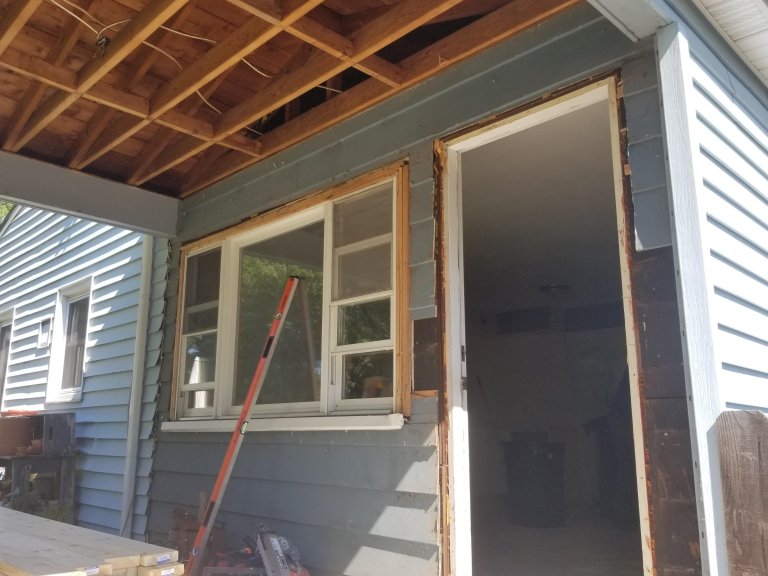
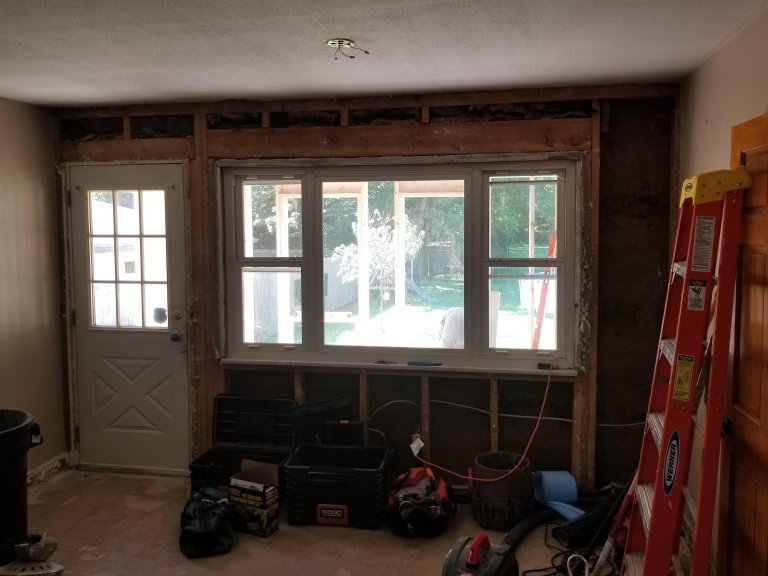
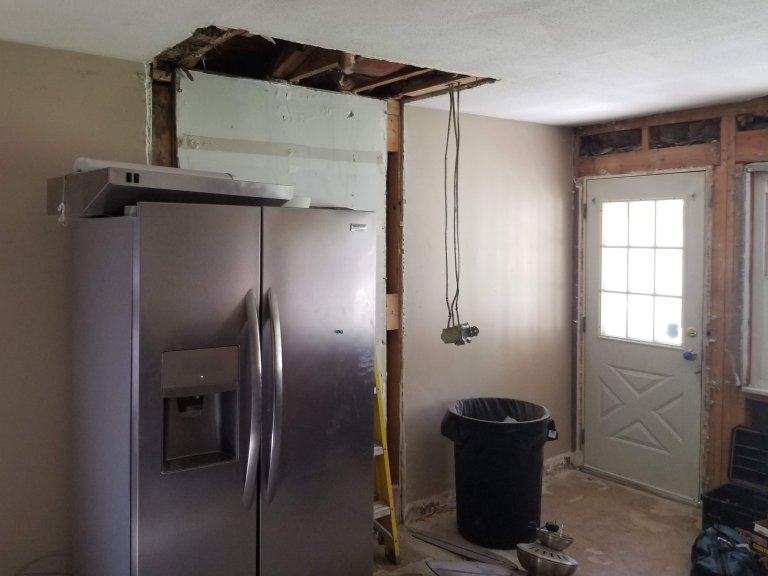
Before


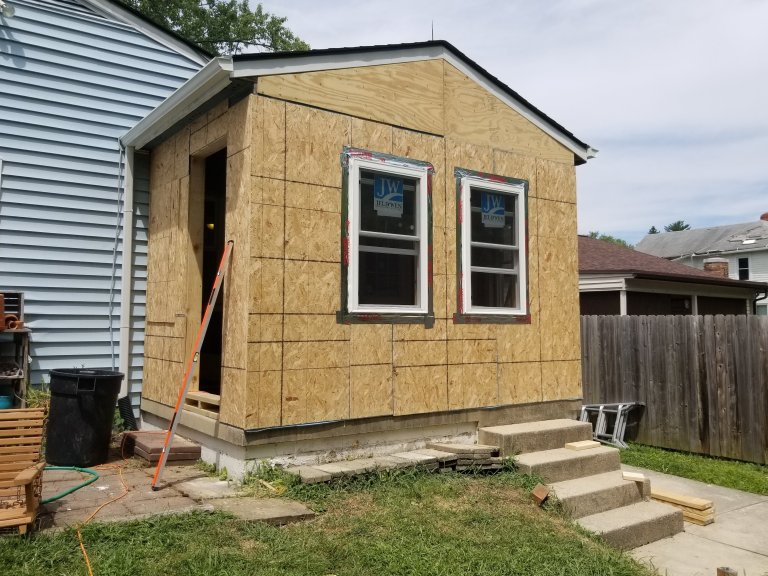
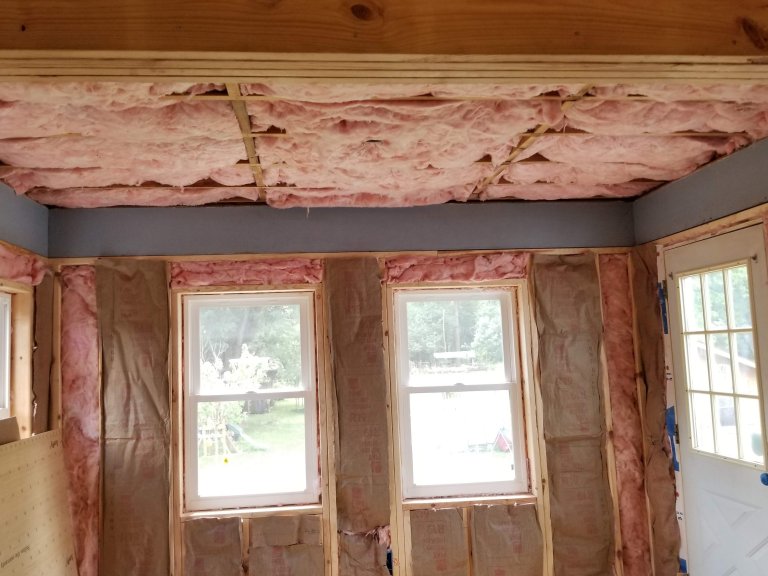
This was a design-build project from the start. The client came to us with a vision — push the kitchen out onto the porch and create a space big enough for holiday gatherings — and iSpec handled everything from there. We collaborated with her to design the layout, plan the cabinet and window placement, and work through material selections. Once the design was locked in, we produced CAD drawings and submitted them to the city for permit approval. No outside architect or designer was needed.The covered porch itself presented a unique set of challenges. It sat on a raised concrete pad with no insulation beneath it, and the roof structure was never designed for indoor use — it needed to be adapted for insulation and proper ventilation before it could become conditioned space. Converting the porch meant removing exterior siding and a bearing wall that separated the kitchen from the porch. Inside the existing kitchen, the old pantry and flooring had to come out, an exterior door and windows had to be removed, the subfloor needed repair where a long-term plumbing leak had caused damage, and an oversized soffit had to be significantly reduced to make room for the new upper cabinets.

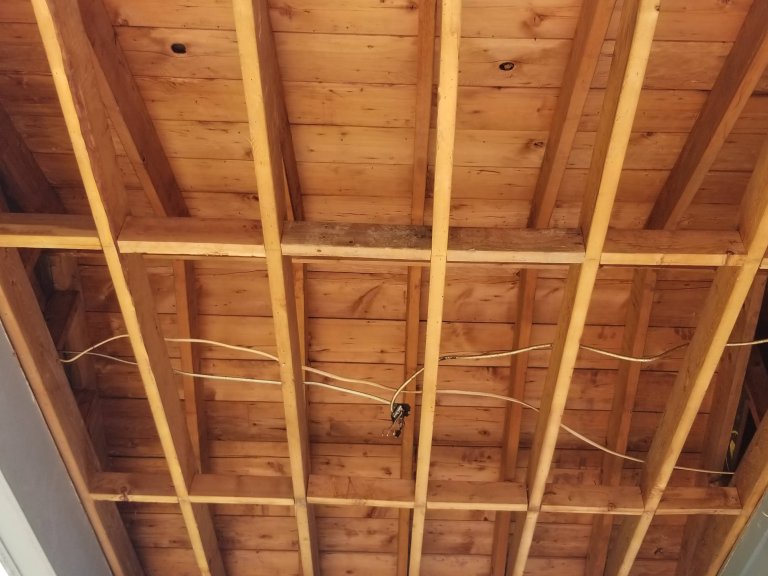
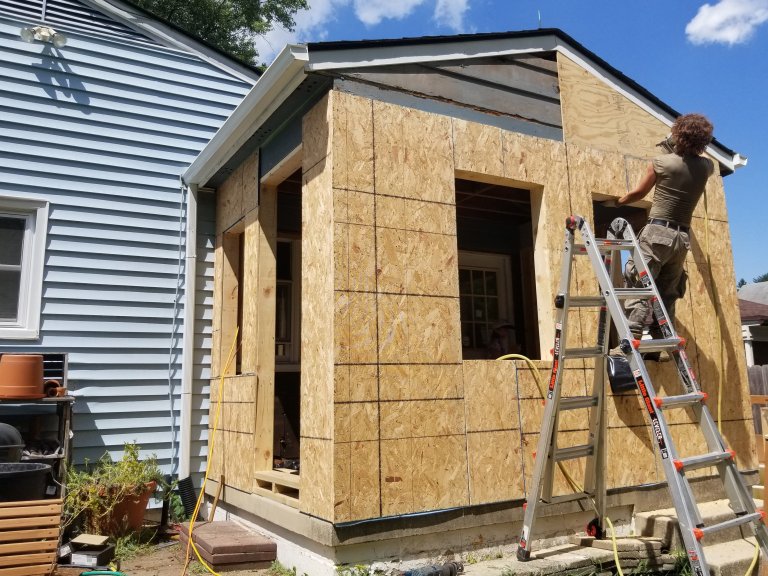
During


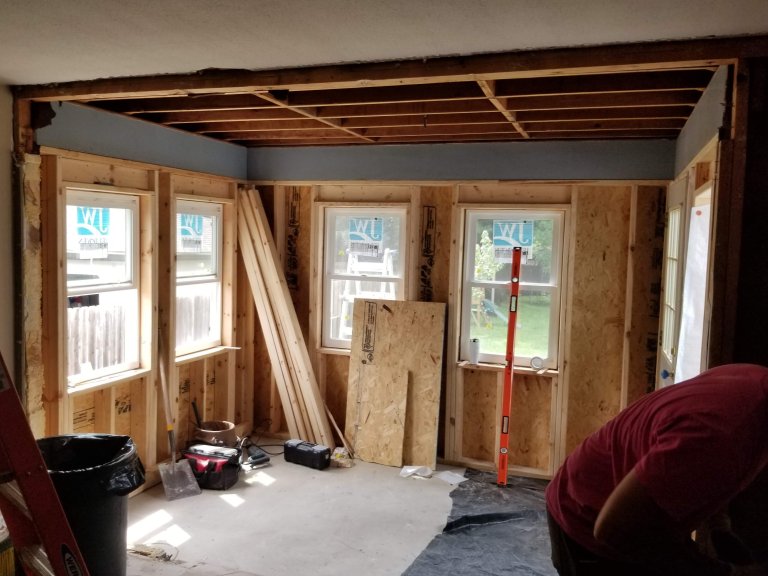
This project carried full city permits and was inspected at every required phase. Work began with demolition of the existing kitchen interior and removal of the bearing wall. The wall was originally designed to carry the load and transfer it through framing that would be concealed inside finished walls — so the beam swap was done in sections, removing studs and installing the new 4-ply 2x8 beam with columns that had positive connection to the foundation, all while keeping portions of the structure loaded throughout the process.

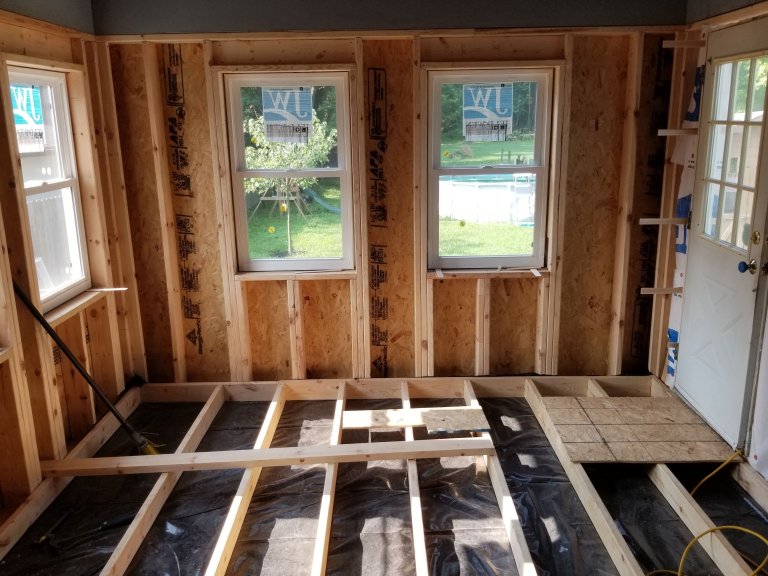
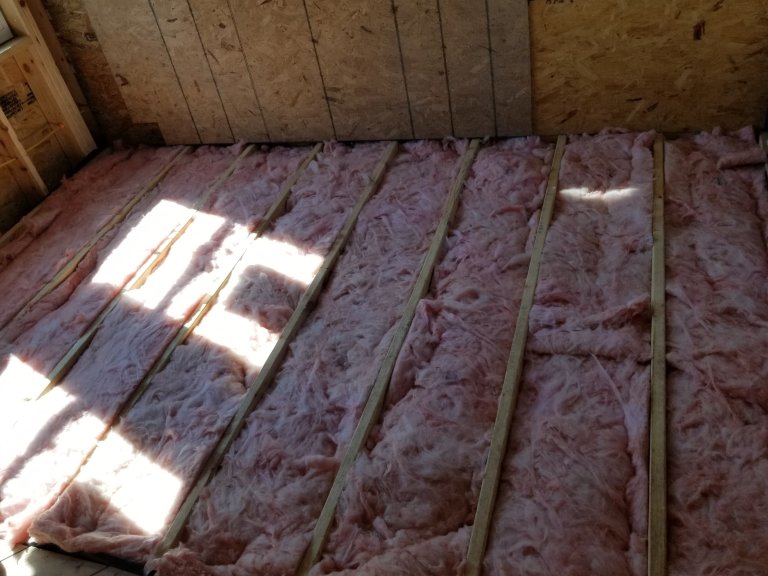
On the porch side, we installed a vapor barrier between the concrete patio and the new framing to manage moisture migration from the slab. Insulation went in between the vapor barrier and the new subfloor, bringing the floor assembly up to code for conditioned space. We installed five new windows and a new exterior door, reframing the openings to match the updated layout.

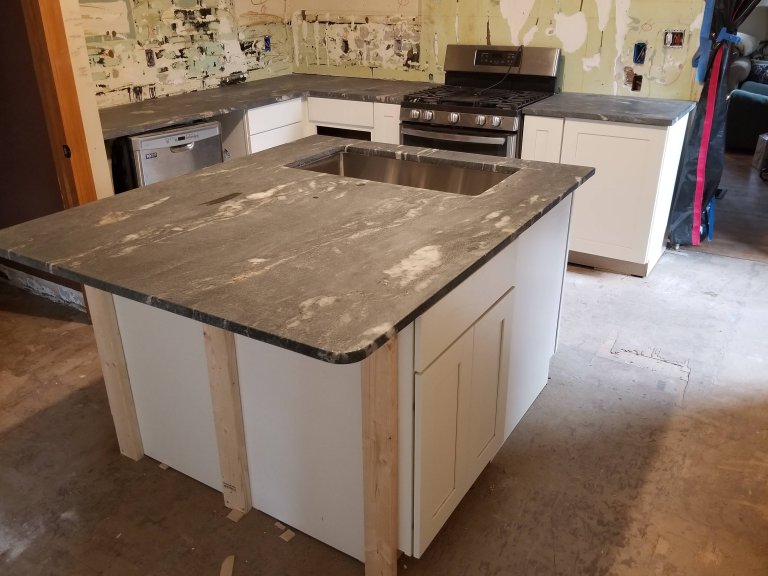
The home's existing electrical panel was a Pushmatic — a style that is outdated and no longer compliant with current code. We replaced it with a modern breaker panel and upgraded the service from 100 amps to 200 amps, giving the home the capacity to safely support the new kitchen circuits, lighting, and appliance loads. Plumbing rough-in included an island sink, made possible by using an AAV (Air Admittance Valve) to vent the drain line without running a traditional vent through the roof. We also wired an air switch at the countertop so the client could toggle her garbage disposal without needing a wall switch behind the sink.

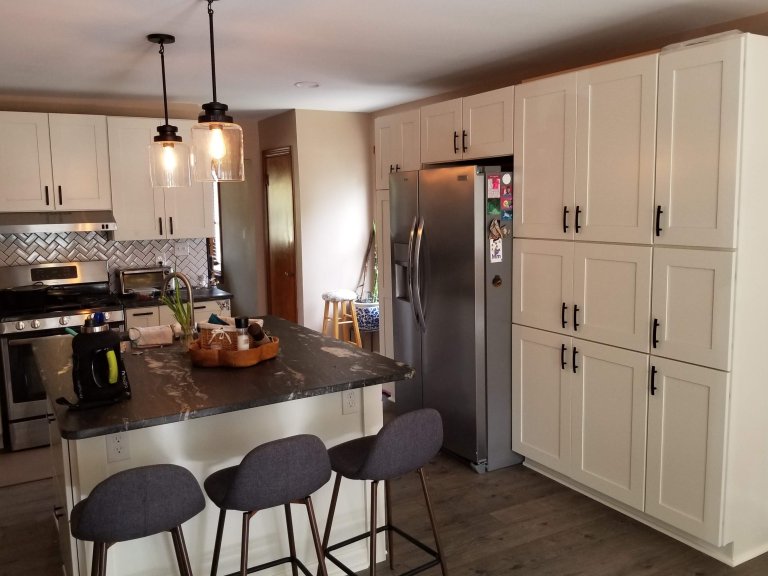
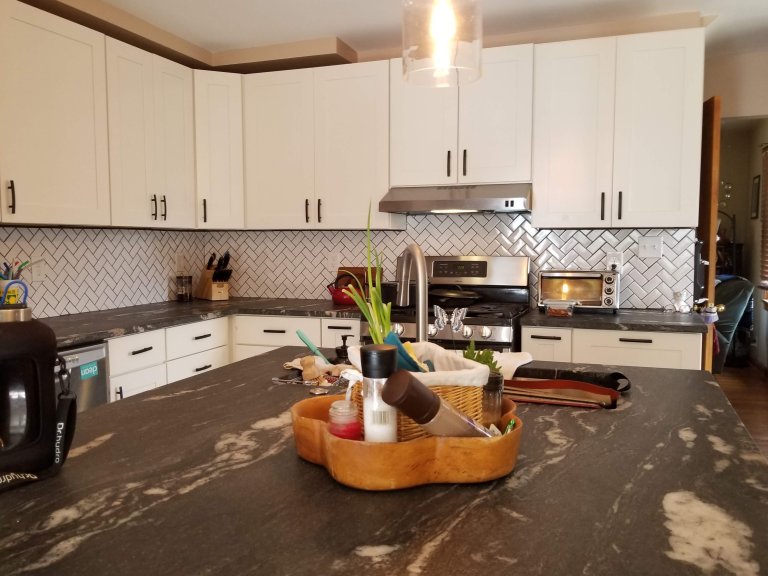
Once rough-ins passed inspection, we moved into finishes. The client selected leathered marble countertops and worked directly with a cabinet company to order custom cabinets built to fit her space — not off-the-shelf box units. Every cabinet door and drawer is soft-close, and the interiors feature pull-out shelving that is also soft-close. Backsplash tile was installed in a herringbone pattern. LVP (Luxury Vinyl Plank) flooring was chosen for its durability given the high foot traffic from both family and pets, and it runs throughout the kitchen with simple metal transitions at the doorways.

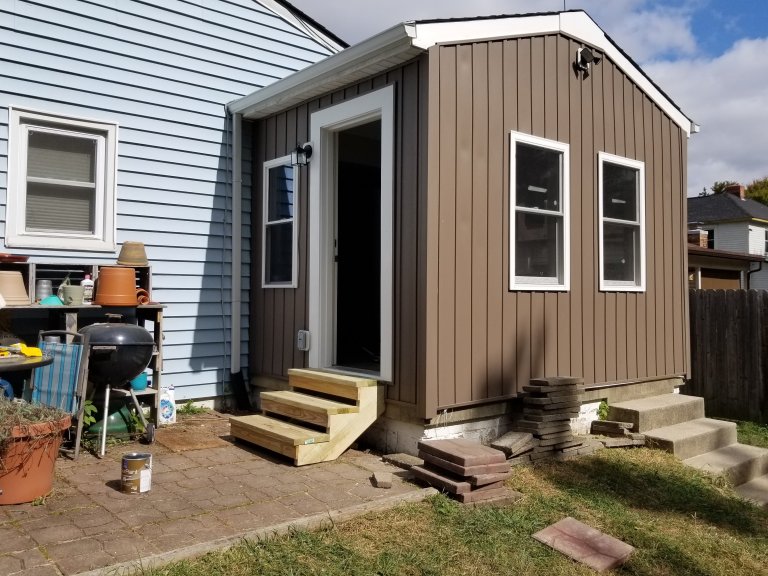
After


The original home has Dutch lap siding — and rather than trying to source and match it, we finished the exterior of the addition with board and batten. It's a different profile, and that's by design. The addition reads as new construction because it is new construction, and a well-built addition doesn't need to disguise itself as original to look right on the house. The same philosophy carried through to the interior. Where original trim remained around existing windows and doors, we preserved it to maintain the home's character. The new windows received clean, modern trim — because trying to replicate profiles that are no longer manufactured costs more than it's worth, especially when the budget is better spent on the things you'll touch and use every day.

That's the thread that runs through this entire project — and through our earlier work on this client's bathroom. Invest where it counts: custom cabinetry with soft-close everything, leathered marble countertops, a herringbone backsplash. Value-engineer where it makes sense: modern trim, board and batten siding, practical transitions. The result isn't a compromise — it's a set of intentional choices that let the finished product stand on its own.

Custom lighting ties the space together inside and out — recessed cans, pendant fixtures over the island, a ceiling fan in the dining area, a new porch light, and exterior flood lights. The dining area that once cramped holiday gatherings now comfortably fits a full table — or multiple setups — for family events. The covered porch that sat unused for most of the year is now the brightest, most open room in the house.