← Back to Our Work

E.B. — Bearing Wall & I-Beam Installation

The homeowner had a clear vision — open up the entire first floor and create one connected living space that flowed from the living room straight through to the kitchen. Standing in the way was a center load-bearing wall running the full width of the house. Walls like this don't come down without a real plan. They carry the weight of everything above them — the roof trusses, the ceiling structure, all of it — and if you get it wrong the consequences are serious. This wasn't a cosmetic project. It was a structural one, and the homeowners were living in the house while the work was being done.

Our first step was a full structural assessment. We verified the wall's load path, confirmed the foundation conditions below each bearing point, and worked with an engineer to determine the correct steel I-beam specification. The engineer provided stamped drawings for the beam sizing and load path. The beam needed to span the entire opening with no posts or columns breaking up the space, which meant getting the sizing exactly right and ensuring each end of the beam had adequate bearing beneath it. Once the engineering was locked in, we built a temporary shoring system to carry the roof trusses above while we removed the wall and set the beam.

The result is a wide-open first floor — living room, dining area, and kitchen flowing together — with no sign a wall was ever there.
Before


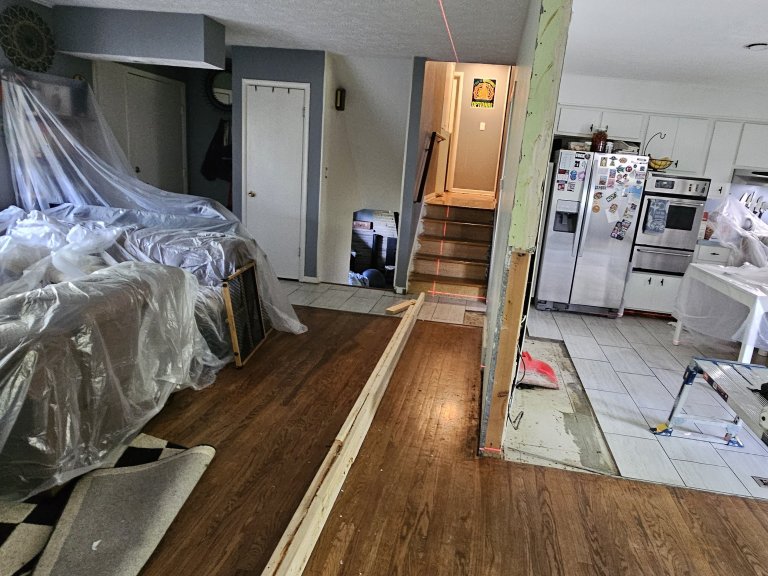
The first floor was divided into separate rooms with the bearing wall cutting straight down the center of the house. On one side was a defined living room, on the other side the kitchen, and the wall between them made both spaces feel smaller and more closed-off than the footprint deserved. There was no pass-through, no cased opening — just a solid wall running floor to ceiling. The kitchen was especially tight — appliances crammed against the wall, barely enough room to move, and the only connection to the rest of the house was a single doorway.

The home had good bones and the owners had already invested in quality finishes throughout, including hardwood floors in the living areas and tile in the kitchen. The structure was in solid condition. The problem wasn't neglect or damage — it was layout. The wall kept the house feeling like a collection of separate rooms instead of one connected space, and the homeowner wanted that to change.

During


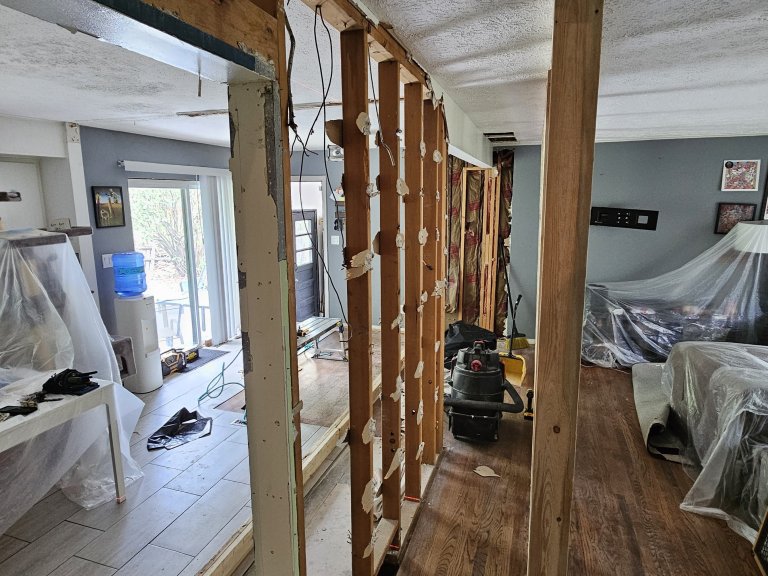
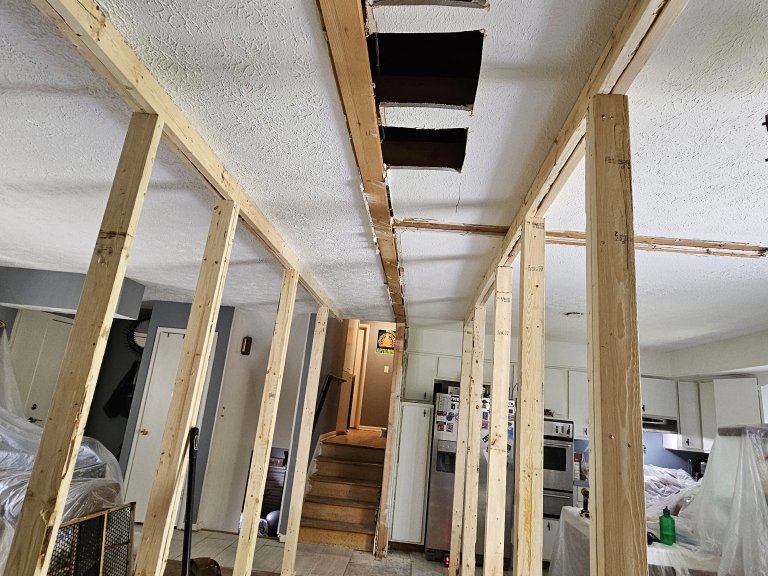
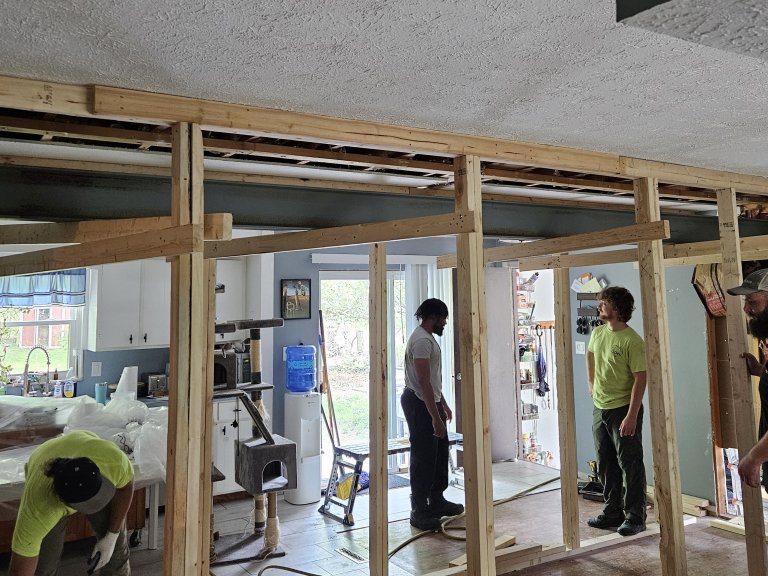
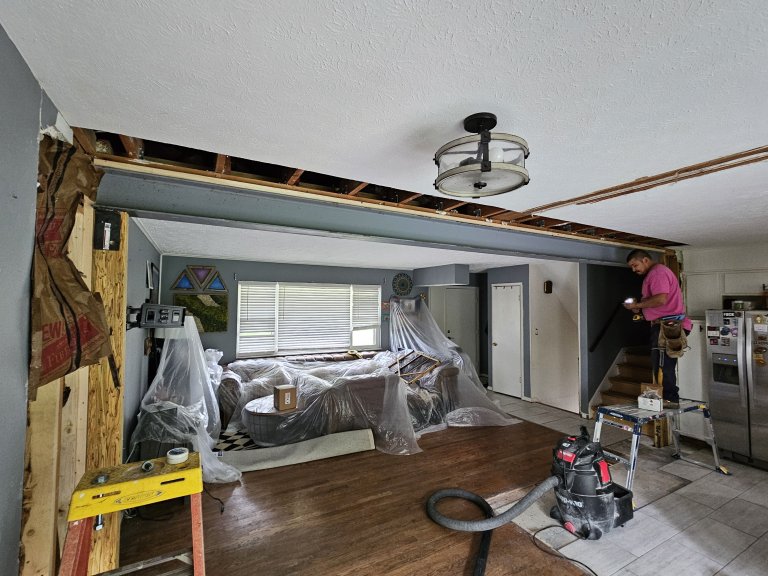
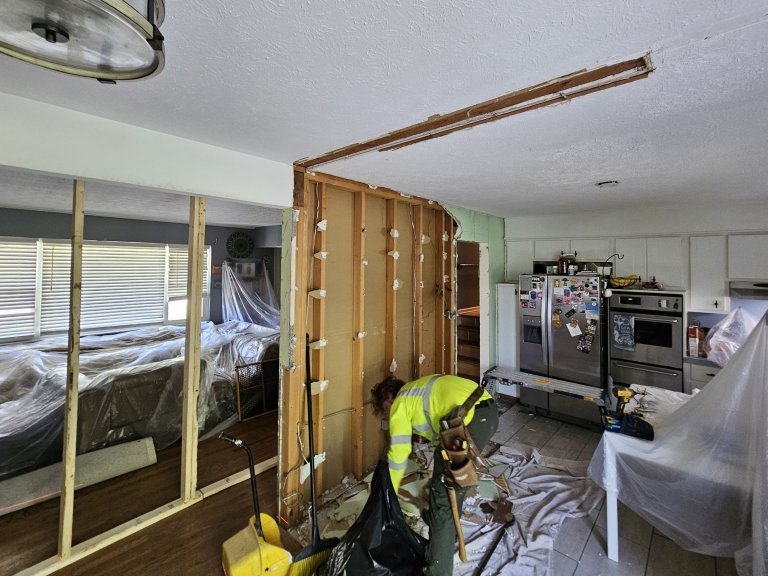
Our scope was the structural work and demo — removing the bearing wall, setting the steel, and confirming the load path. Before any of the existing framing was touched, we built a full temporary support system. Rows of vertical shoring columns went up on both sides of the bearing wall, tied to a horizontal carrying beam above that picked up the load from the roof trusses. Only once that shoring was in place and verified did we begin demo on the wall.

With the wall framing removed, the full scope became visible — the roof trusses running across the span, the electrical lines routed through the wall cavity, and the bearing locations at each end where the new beam would sit. The electrical was capped off in the basement and left for the electrician the homeowner hired separately to reroute later.

The I-beam was 22 feet long and far too heavy to muscle through the house by hand. There was no way to bring machinery inside without risking serious damage to the home, so we had to get creative. We cut a temporary opening in the wall between the garage and the house and slid the beam through horizontally, working it into position without equipment and without damaging the existing structure. Getting a beam that size through a residential space and into its final position took careful coordination and planning at every step.

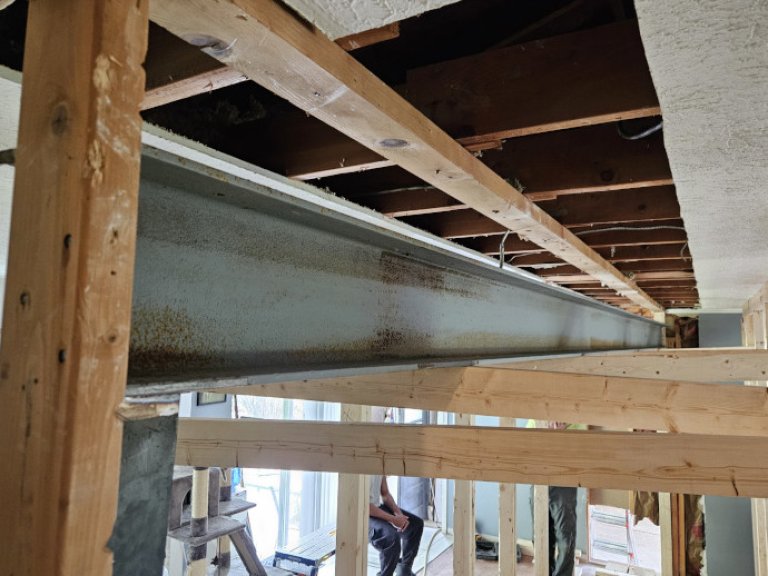
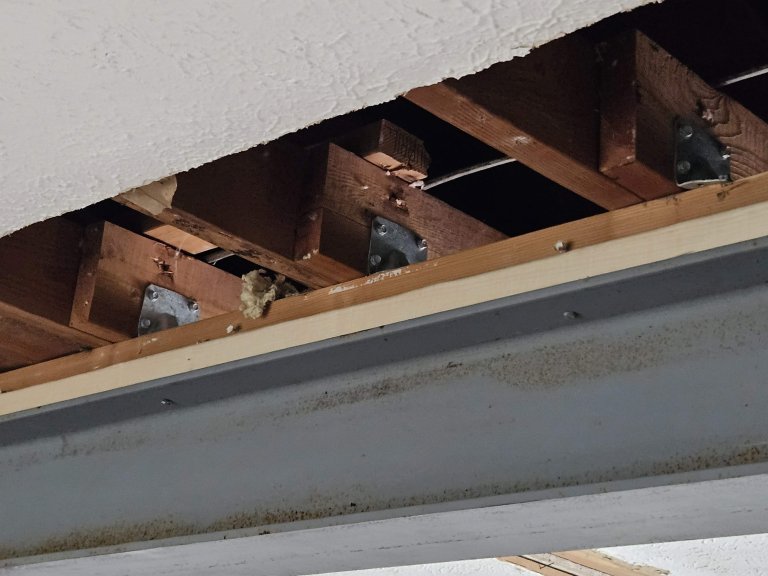
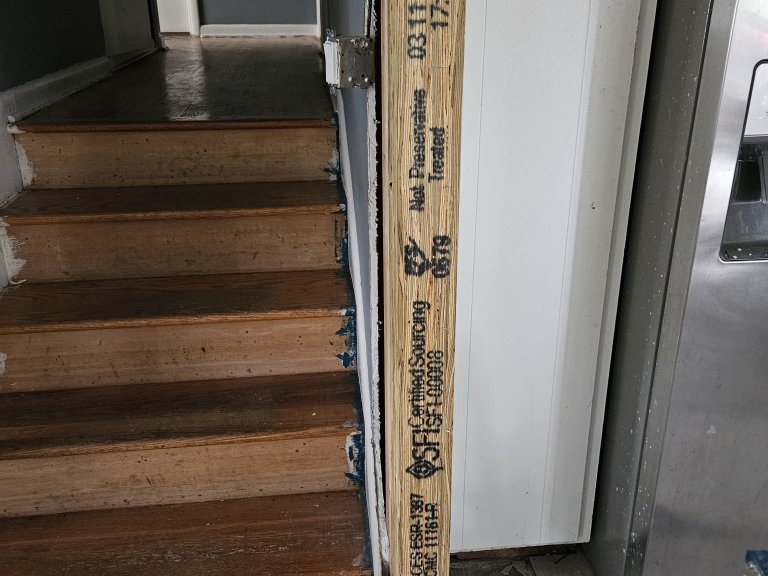
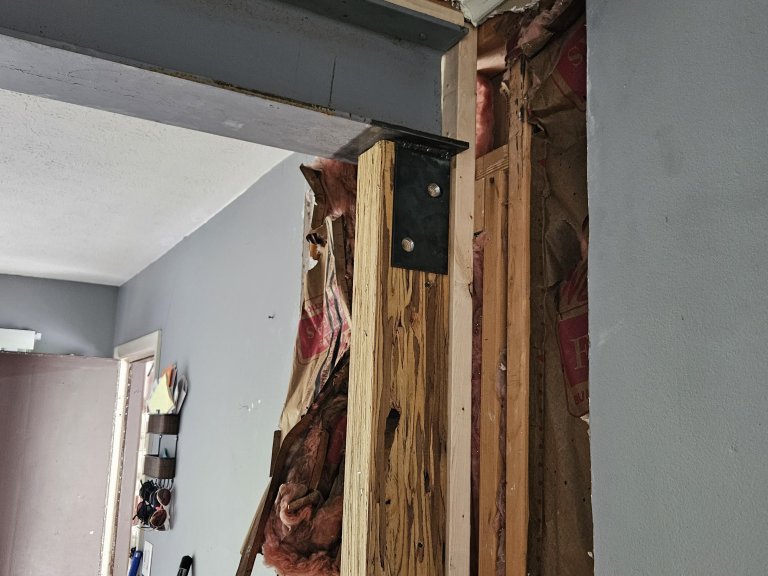
At each end, LVL columns were recessed into the walls and set to make positive contact with the foundation wall below, transferring the load directly into the foundation without cutting into the floor or leaving any exposed posts in the living space. The beam was sized and placed per the stamped engineer's report, and joist hangers were installed across the full length to pick up every roof truss above, tying the roof structure directly to the new steel.

Once the beam was set and all connections confirmed, the temporary shoring came down and the space opened up for the first time. The homeowners were living in the house through all of this, so dust containment and protecting the existing finishes was part of the job from day one.

After


iSpec's scope on this project was structural — remove the bearing wall, set the steel, and confirm every connection in the load path. That work is complete and it's exactly what the engineer specified.

The 22-foot steel I-beam spans the full width of the house with joist hangers tying every roof truss directly to the new steel. The LVL columns at each end are recessed into the walls and bear directly on the foundation below, transferring the full load of the roof structure down to the ground without a single post or column visible in the living space. Every connection was made per the stamped engineer's report — beam to column, column to foundation, trusses to beam. The structural system is sound and the load path is verified.

The homeowner handled the finish work on their own — wrapping the beam, patching the ceiling, and restoring the drywall to match the existing interior. That's a testament to how clean the structural work was left. When the framing, steel, and connections are done right, the finish work is straightforward.

To someone walking in today, the work is invisible. What they see is one continuous open space — kitchen, dining area, and living room connected for the first time — with nothing breaking up the flow. That's what good structural work looks like when it's done right. If you're considering a bearing wall removal in your home, this is the kind of project we do.