← Back to Our Work

IMPACT Community Action / Ro's Kitchen — Commercial Kitchen Renovation

IMPACT Community Action has been fighting poverty in Franklin County for decades. Their Southwood Avenue facility in Columbus serves as a hub for community programs — but for twenty years, the building's commercial kitchen sat unused. The space had originally been built as a cafeteria serving Techneglas, the glass factory that once operated on site. When that chapter ended, the kitchen went dormant. The heavy cooking equipment was removed over time, but the counters, serving infrastructure, and built-in systems remained — aging in place with no maintenance and no use.

When IMPACT decided to bring the kitchen back to life, the project came to iSpec through a referral from an existing client. Architectural and engineering drawings were already in hand, defining the new equipment layout, MEP routing, and code requirements for a full commercial kitchen. iSpec quoted against the drawings, won the bid, and went to work.

The stakes were higher than a typical commercial renovation. This kitchen wasn't being built for a restaurant — it was being built for Ro's Kitchen, a transform kitchen operated by Columbus Food Rescue where rescued food from restaurants, bakeries, and grocery stores is turned into ready-to-eat meals for shelters and community organizations across Central Ohio. Every piece of equipment, every drain line, every inch of prep surface had to meet commercial code and pass health department inspection. The space had to work not just for professional chefs, but for the volunteers who help prepare thousands of meals each year — and it had to be built while IMPACT continued serving the public in the rest of the building.
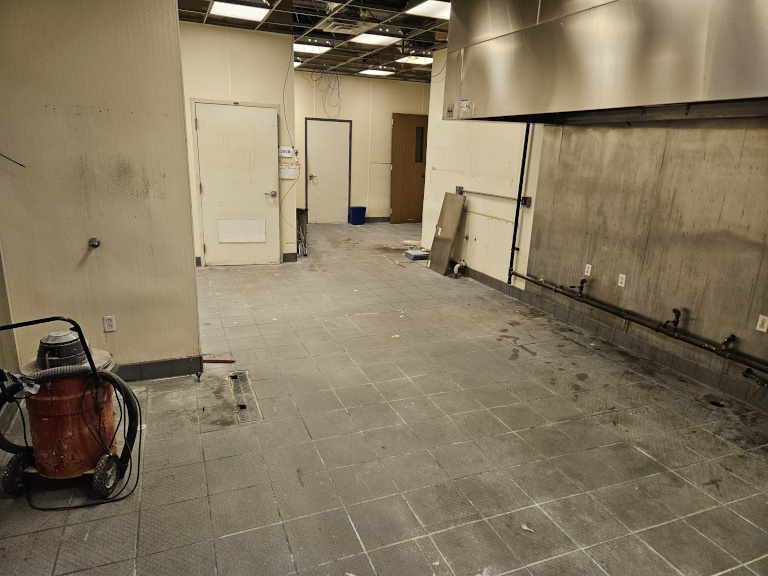
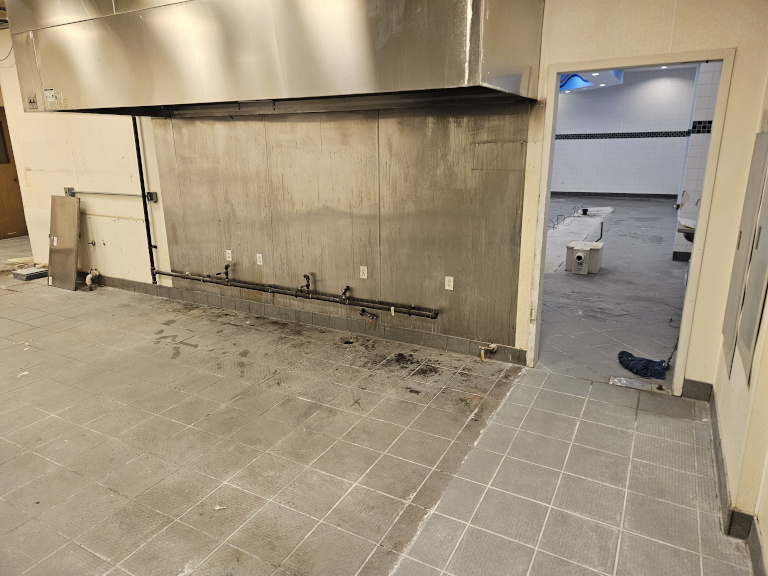
Before


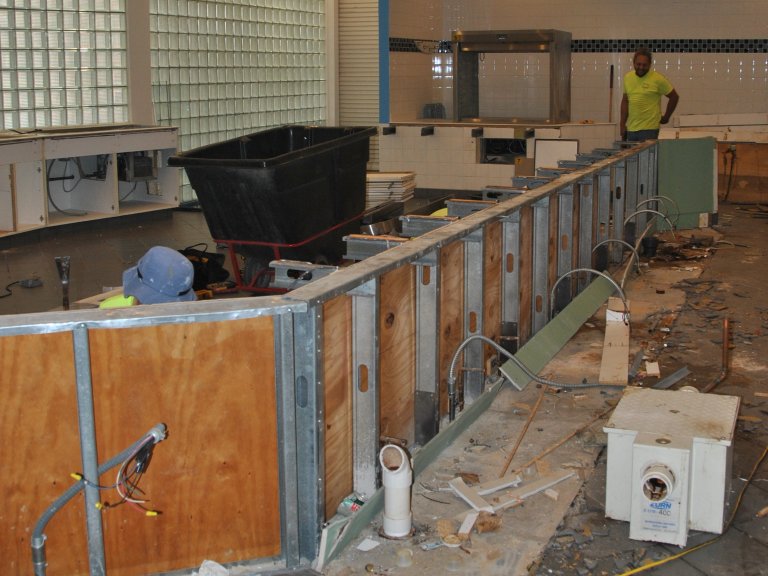
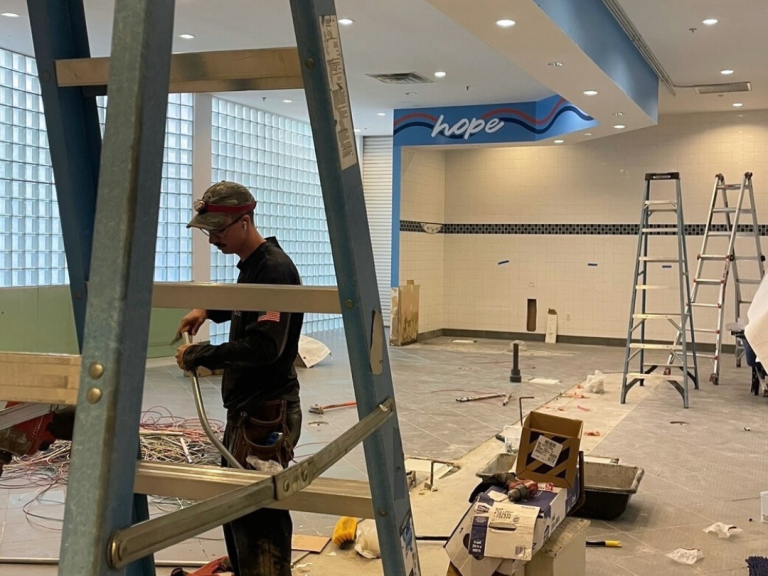
The kitchen had been sitting untouched for roughly twenty years since its days as the Techneglas factory cafeteria. Much of the original cafeteria was still in place — counters, a hot and cold serving bar, an ice machine, and a soda machine all remained from the previous operation. The heavy cooking equipment had been removed at some point, but everything else was still there, outdated and unusable. Behind and below it all, the cast iron drain lines were deteriorated and corroded, and the MEP rough-ins were positioned for a layout that no longer served any purpose. The gas system was sized for equipment that was never coming back.

The existing hood system was functional and would be retained, but everything else in the kitchen needed to be demoed out and rebuilt. The original quarry tile floor, laid when the cafeteria was first built, was still in place and in serviceable condition.

During


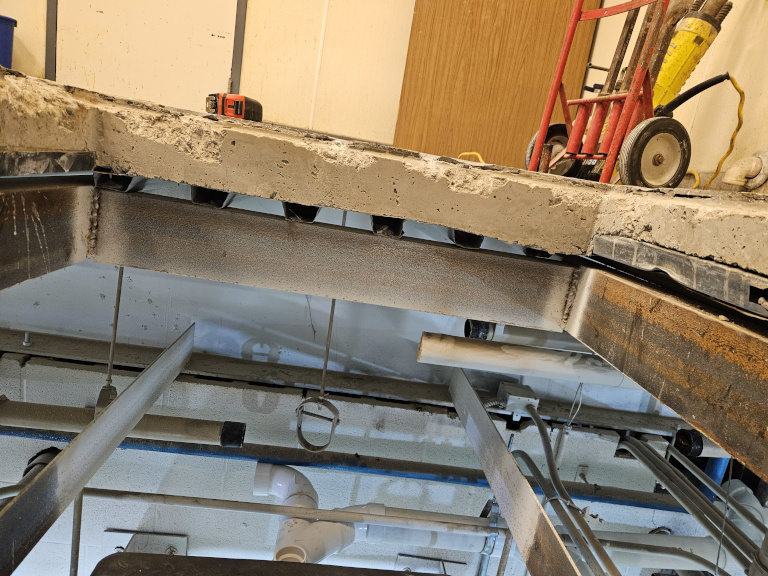
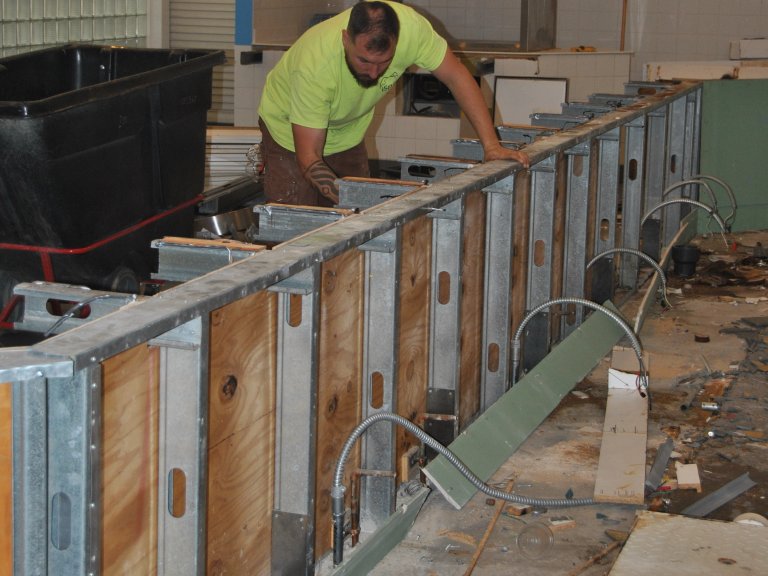
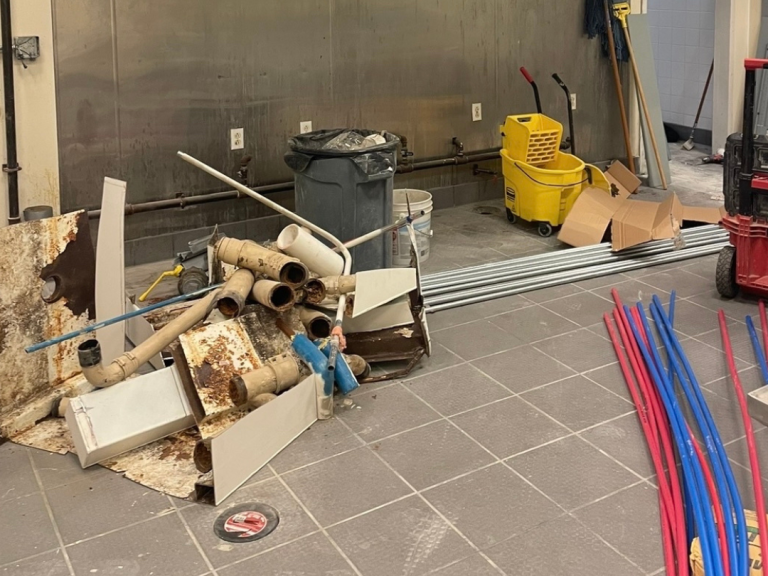
Demo came first. The old counters, hot and cold serving bar, ice machine, soda machine, and all remaining cafeteria infrastructure were removed. The deteriorated cast iron drain lines were pulled and replaced with new PVC waste lines — not just in the kitchen, but throughout the connected runs that had corroded over decades of disuse. New PEX supply lines were run to every fixture location.

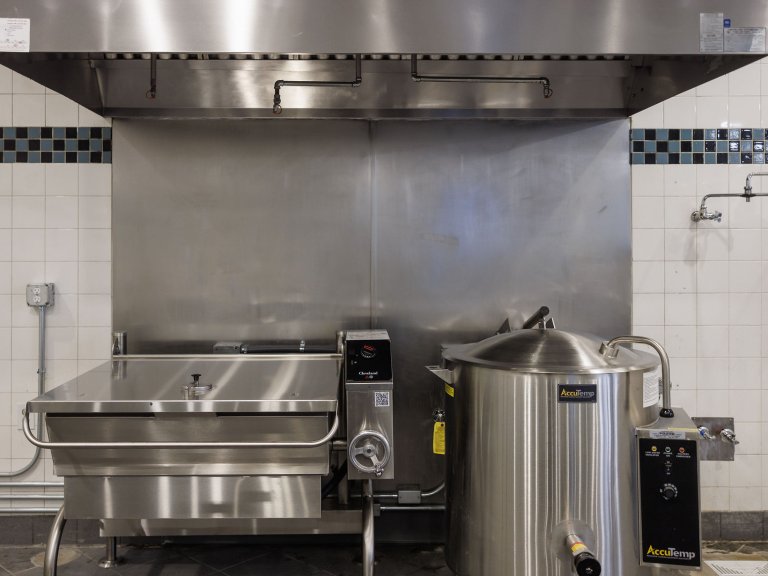
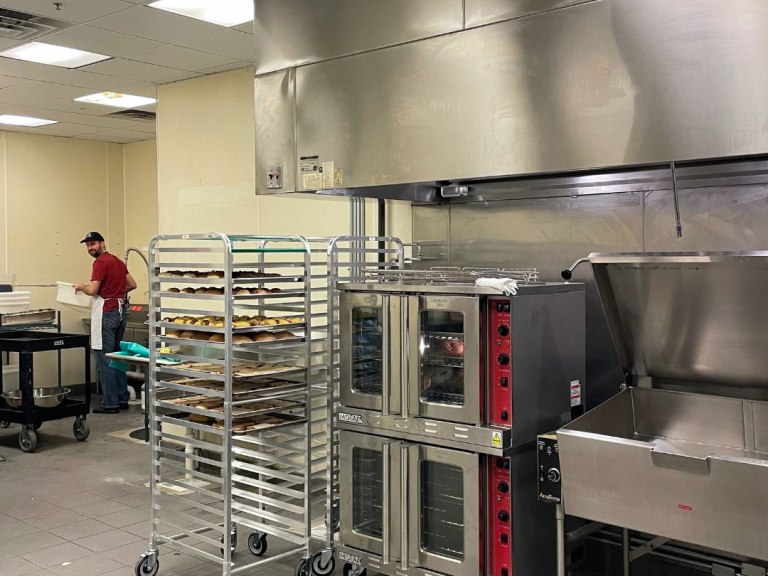
The biggest infrastructure change was converting the entire kitchen from gas to electric. The new kitchen would operate entirely on electric equipment — convection ovens, tilt skillets, and a steam jacket — which required substantial new electrical capacity: new panels, circuits, and dedicated runs to each piece of equipment. The old gas piping was cut off and capped but left in place due to budget constraints. A detail often overlooked in a gas-to-electric conversion is the fire suppression system. Gas-fired kitchens use suppression designed for grease fires and open flames. Electric equipment has different requirements, so the existing system had to be swapped out entirely by a licensed sub.

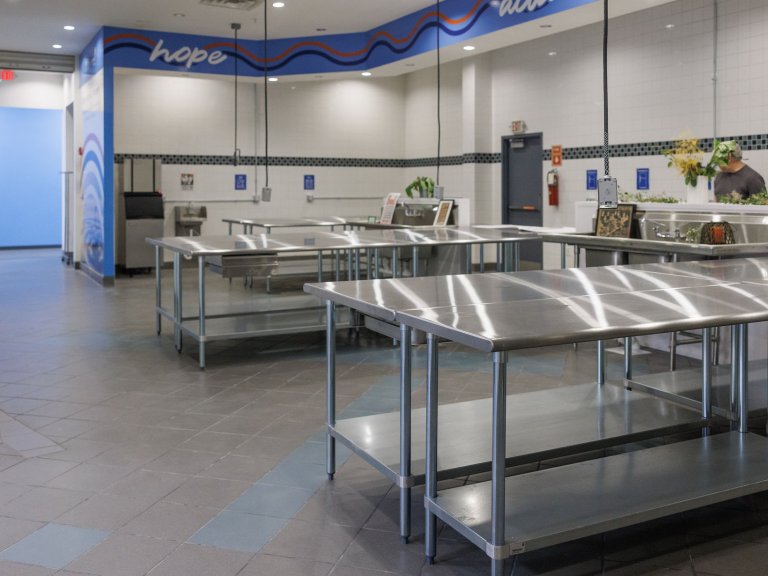
The plumbing scope was substantial. Eight sinks were installed — two three-compartment sinks for dishwashing, three two-compartment sinks for prep, and three handwash stations positioned per the health department layout. New floor drains and floor sink drains were set to handle the volume a working commercial kitchen produces. A commercial-grade hot water tank and a hot water recirculating pump were installed to keep water hot at every fixture — the tank alone was significantly more expensive than a residential unit, but necessary for a kitchen running eight sinks and multiple pot fillers. iSpec coordinated with a separate hood contractor — one the team referred — to ensure the existing hood system aligned with the new cooking line and met current ventilation requirements.

One of the most unexpected details was the floor tile. The original quarry tile needed to remain, and any new tile had to match. During demo, the crew noticed an engraved manufacturer's logo on the underside of a removed tile. That logo led to the original manufacturer in Tennessee, and iSpec sourced the exact match. In a space that has to pass health department inspection, a seamless floor surface isn't cosmetic — it's a code requirement.

Drywall was patched where old penetrations had left holes. Stainless steel prep tables, the full cooking line, and specialized equipment were installed to the equipment plan. All connections were tested and inspected. Throughout the build, IMPACT continued operating in the rest of the building and serving the public, which meant coordinating for noise, managing dust containment, and maintaining clear access for staff and visitors.

Construction took approximately three weeks. The extended timeline came from the inspection process — commercial kitchens require both building department and health department sign-offs, and iSpec assisted with follow-up items to secure those approvals.

After


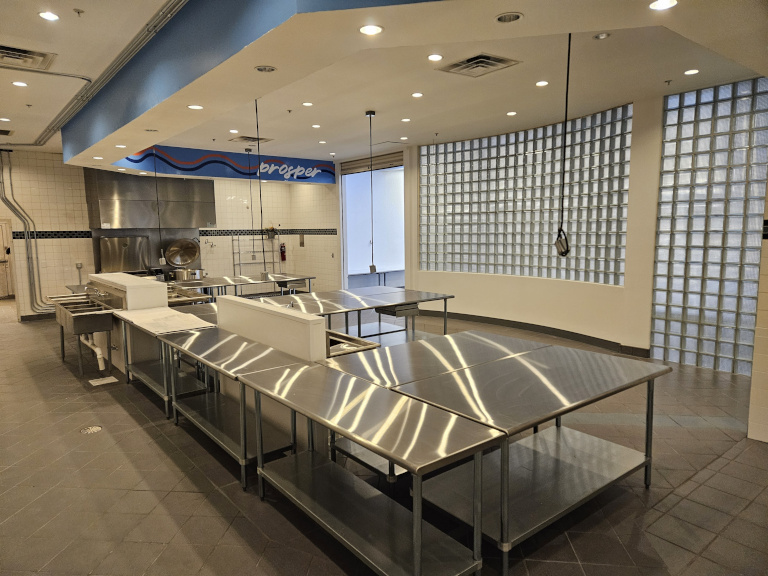
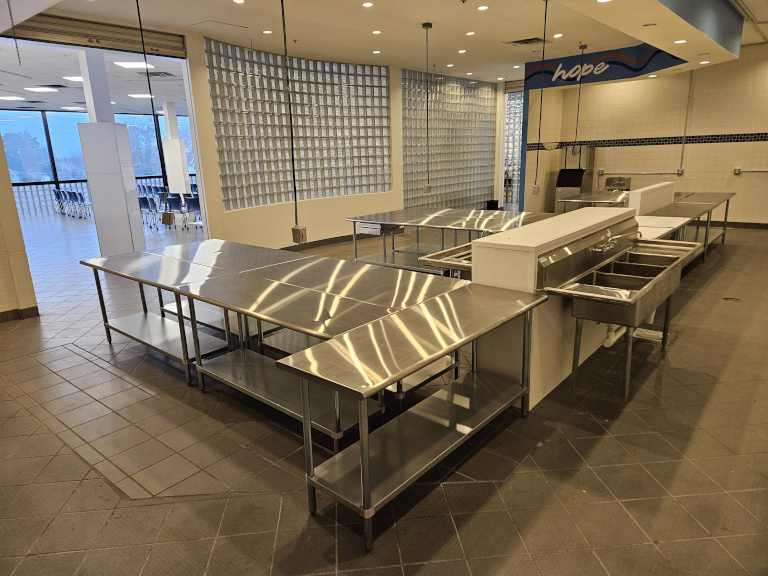
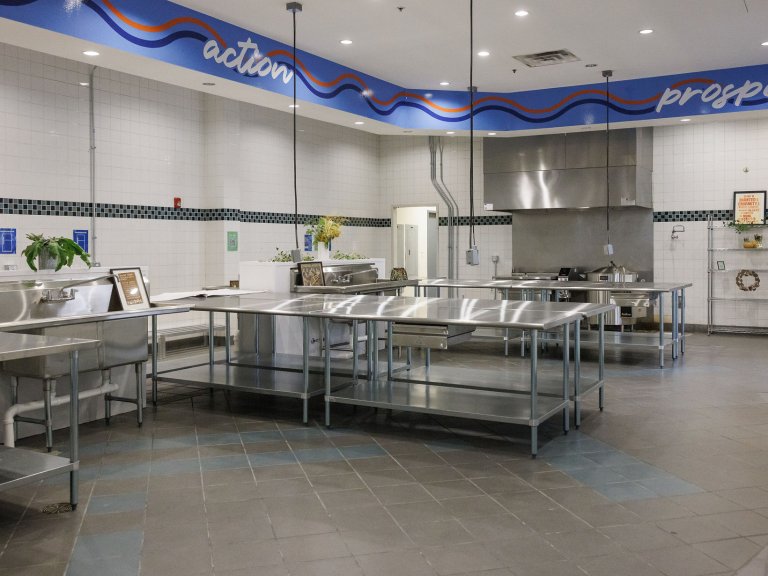
The finished kitchen is a fully operational commercial food preparation facility — clean, bright, and built to code from the floor up. Stainless work surfaces run the length of the prep area. The all-electric cooking line sits under the existing hood system with full coverage, paired with the new electric-rated fire suppression system. The tilt skillet and steam jacket give the kitchen the capacity to prepare meals at volume, with pot fillers serving the line directly. Eight sinks serve every station in the room. Floor drains handle the runoff a commercial kitchen demands.

The quarry tile floor — original to the building's Techneglas cafeteria days, now seamlessly matched where new tile was needed — meets the continuous, cleanable surface standard the health department requires.

This kitchen now operates as Ro's Kitchen, where Columbus Food Rescue transforms rescued food into thousands of meals distributed to shelters and community organizations across Central Ohio. The equipment, the layout, and the infrastructure iSpec built are designed to support that mission — a professional kitchen built for professional work, serving people who need it most.

From a Techneglas cafeteria to twenty years of silence to a kitchen that feeds the community — this space has had three lives. The third one is the one that matters.

The project passed all building and health department inspections. The kitchen is in service.